Choosing a baby monitor is one of the first technological decisions many parents make, and it often leads to the same question: Should you choose a WiFi or a non-WiFi baby monitor? With so many models available, each promising safety, clarity, and peace of mind, the decision can feel confusing, especially for first-time parents.
Both WiFi and non-WiFi baby monitors are designed to help parents stay aware of their baby’s needs while they sleep. However, the way these monitors connect, perform, and integrate into daily routines can vary significantly. Some parents value the flexibility of app-based monitoring, while others prefer the simplicity and reliability of a dedicated parent unit.
Concerns around safety, privacy, signal reliability, and ease of use often drive this comparison. Questions such as are WiFi baby monitors safe, do non-WiFi monitors work without internet, and which baby monitor is more reliable at night are among the most commonly searched topics by parents.
This guide compares WiFi and non-WiFi baby monitors clearly and practically. We will explain how each type works, outline its strengths and limitations, and help you understand which option may suit your home and lifestyle best. Rather than focusing on brand names or unnecessary features, this comparison focuses on real-world use, especially during newborn and early infant care.
By the end of this article, you will have a clear understanding of the difference between WiFi and non-WiFi baby monitors, what matters most for safety and reliability, and how to choose the option that gives you confidence and peace of mind.
What Is a WiFi Baby Monitor
A WiFi baby monitor is a monitoring system that connects to your home internet network and allows you to view or listen to your baby through an app on a smartphone or tablet. Unlike traditional monitors that use a dedicated parent unit, WiFi baby monitors rely on internet connectivity to transmit data.
How WiFi Baby Monitors Work
WiFi baby monitors use a camera and microphone placed in your baby’s room. This device connects to your home router and sends audio and video data through the internet to an app installed on your phone or tablet. As long as you have an internet connection, you can access the monitor from anywhere within your home and often from outside the home as well.
This setup is appealing to parents who want flexibility. For example, you can check in on your baby while moving around the house or while another caregiver is at home. Many WiFi baby monitors also support multiple users, allowing both parents to monitor from their own devices.
Common Features of WiFi Baby Monitors
WiFi baby monitors often include a wide range of features. These may include high definition video, digital zoom, night vision, motion alerts, sound alerts, and room temperature monitoring. Some models also offer cloud-based storage or activity tracking over time.
App-based controls allow parents to customise alerts, adjust sensitivity, and review recordings directly from their phone. This level of control can feel convenient, especially for parents who are already comfortable managing smart devices.
Because they rely on software, WiFi baby monitors may also receive updates that add new features or improve performance. This can make them feel more future-ready compared to simpler systems.
Who WiFi Baby Monitors Are Best Suited For
WiFi baby monitors can be a good fit for parents who want remote access and flexibility. They are often chosen by families who travel, parents who want to check in while away from home, or households where multiple caregivers need access.
They can also appeal to parents who prefer minimal hardware, since there is no separate screen to carry around. If you are comfortable using apps and managing notifications, a WiFi baby monitor may fit naturally into your routine.
However, WiFi baby monitors are not without limitations. Their performance depends heavily on internet stability, and they introduce additional considerations around data privacy and security. These factors become especially important when monitoring newborns, where reliability and simplicity often matter most.
What Is a Non-WiFi Baby Monitor
A non-WiFi baby monitor is a traditional monitoring system that does not rely on an internet connection. Instead, it uses a direct, closed signal between the camera or audio unit in your baby’s room and a dedicated parent unit. These monitors are often chosen for their simplicity, reliability, and focus on core monitoring functions.
How Non-WiFi Baby Monitors Work
Non WiFi baby monitors operate using radio frequencies or secure digital transmission, such as DECT or FHSS technology. The monitor placed in the nursery sends audio or video directly to a parent unit without passing through the internet or external servers.
Because the connection is point-to-point, the monitor continues to work even if your home internet goes down. This direct communication is one of the main reasons many parents consider non-WiFi baby monitors more reliable for everyday use.
The parent unit usually includes a built-in screen for video models or a speaker for audio-only models. This dedicated device is always ready to use and does not require logging into an app or managing background settings.
Common Features of Non-WiFi Baby Monitors
Non WiFi baby monitors typically focus on essential features rather than advanced smart functions. Common features include clear audio, night vision for video models, adjustable sound sensitivity, and two way audio.
Many non WiFi baby monitors also include room temperature monitoring and visual sound indicators, which can be helpful during night time monitoring. Battery powered parent units allow parents to move freely around the house without staying near a phone charger.
While these monitors may not offer cloud storage or remote access outside the home, they often deliver consistent performance within their specified range.
Who Non-WiFi Baby Monitors Are Best Suited For
Non-WiFi baby monitors are often preferred by parents who value reliability and ease of use. They are especially popular for newborn monitoring, where dependable audio and visual cues are more important than advanced tracking features.
Parents who are concerned about data privacy or internet security may also feel more comfortable with a non-Wi-Fi baby monitor. Since these systems do not connect to the internet, the risk of hacking or unauthorised access is significantly reduced.
These monitors are well-suited for parents who want a straightforward setup, minimal configuration, and a device that works consistently without relying on internet speed or signal strength.
As we move into direct comparison, the differences between WiFi and non-WiFi baby monitors become clearer in terms of reliability, safety, and daily use.
WiFi vs Non-WiFi Baby Monitors: Key Differences
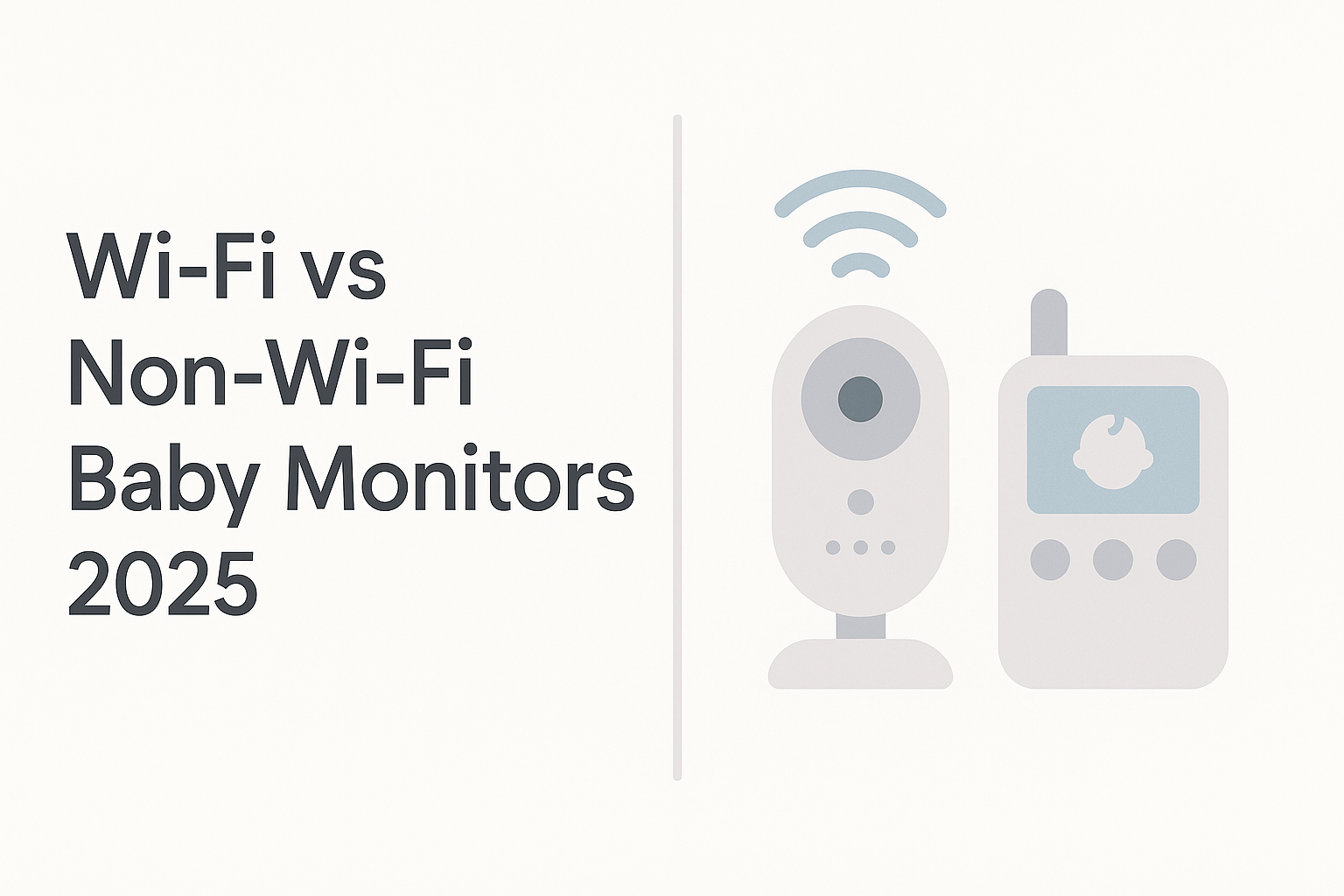
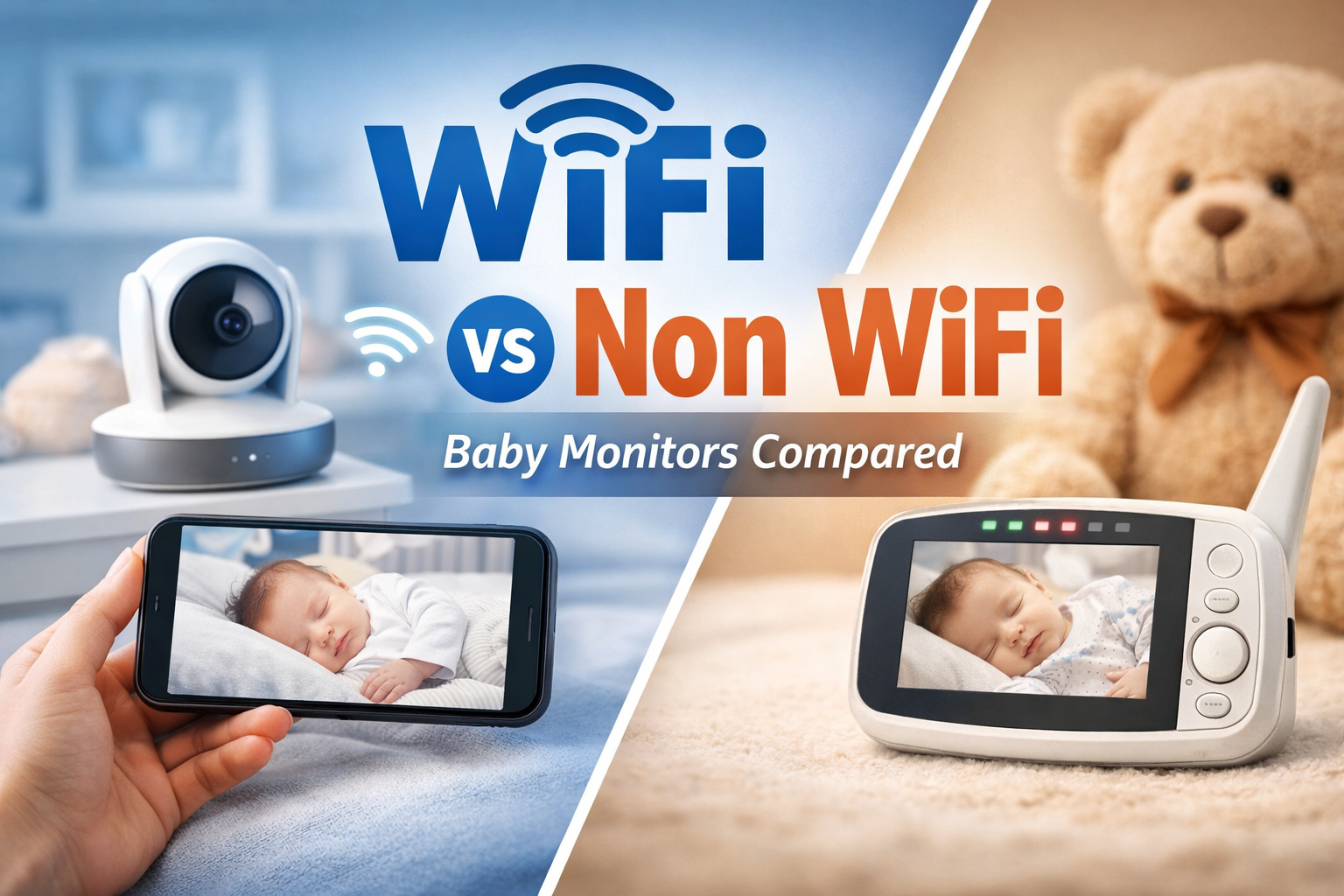
When parents compare WiFi vs non WiFi baby monitors, the real differences go beyond price or appearance. The way each monitor connects, performs in real homes, and fits into daily routines can have a major impact on peace of mind, especially during the newborn stage. Understanding these differences helps answer the common question, which baby monitor is better, WiFi or non WiFi.
Connectivity and Internet Dependency
The most fundamental difference between WiFi and non WiFi baby monitors is how they connect.
WiFi baby monitors rely entirely on your home internet connection. Audio and video data are transmitted through your router and accessed via an app. If your internet connection is slow, unstable, or temporarily unavailable, monitoring can be delayed or interrupted.
Non WiFi baby monitors use a closed, direct connection between the nursery unit and the parent unit. They do not depend on internet access, apps, or routers. This makes them more predictable in everyday use, particularly during night time monitoring when reliability is critical.
Parents who experience frequent internet issues often find non WiFi baby monitors less stressful to use.
Range and Signal Performance
Range is another major difference between these two types of baby monitors.
WiFi baby monitor range is technically unlimited, as long as you have internet access. You can check the monitor from anywhere using your phone. However, within the home, performance still depends on router placement, wall thickness, and network congestion.
Non WiFi baby monitors have a fixed range, usually measured in metres. Within this range, performance is often stable and consistent. Many models are designed specifically to work well through walls and floors, making them reliable in multi level homes.
For parents focused on in home monitoring rather than remote access, non WiFi baby monitor range is often more than sufficient.
Ease of Setup and Daily Use
Ease of use is an area where many parents notice clear differences.
WiFi baby monitors require app installation, account creation, network setup, and ongoing software updates. While this setup may feel familiar to tech confident parents, it can be frustrating during the early days with a newborn.
Non WiFi baby monitors usually involve simple plug and play setup. Once paired, they are ready to use instantly. There is no need to unlock a phone, manage notifications, or troubleshoot connectivity issues.
For night time use, a dedicated parent unit with physical buttons can feel faster and more reassuring than navigating a phone screen.
Alerts and Notifications
WiFi baby monitors typically offer customisable alerts, such as motion detection, sound alerts, and push notifications. These alerts can be useful, but they may also create notification overload if sensitivity is not adjusted carefully.
Non WiFi baby monitors often rely on audio alerts and visual indicators on the parent unit. While less detailed, these alerts are usually straightforward to interpret.
Many parents find that simpler alerts reduce anxiety and encourage more natural monitoring habits.
WiFi vs Non WiFi Baby Monitors: Comparison Table
| Feature | WiFi Baby Monitor | Non WiFi Baby Monitor |
|---|---|---|
| Internet required | Yes | No |
| Monitoring device | Smartphone or tablet app | Dedicated parent unit |
| Works without internet | No | Yes |
| Setup complexity | Moderate to high | Simple |
| Remote access outside home | Yes | No |
| Signal reliability at night | Depends on internet | Very consistent |
| Privacy and security risk | Higher if unsecured | Lower due to closed system |
| Best for | Parents wanting remote access | Parents prioritising reliability |
These differences show that neither option is universally better. Instead, the right choice depends on what matters most to you, whether that is flexibility and remote access or simplicity and dependable performance.
Safety and Privacy Considerations
Safety and privacy are among the most important factors parents consider when comparing WiFi and non WiFi baby monitors. Since these devices are used in private spaces and involve monitoring a newborn, understanding the risks and protections associated with each type is essential.
Are WiFi Baby Monitors Safe
WiFi baby monitors are designed with safety in mind, but because they connect to the internet, they introduce additional security considerations. Data such as audio and video is transmitted through your home network and, in some cases, through external servers.
If a WiFi baby monitor is not properly secured, there is a potential risk of unauthorised access. This is why strong passwords, secure network settings, and regular software updates are important. Choosing reputable brands that prioritise encryption and data protection can reduce risks significantly.
That said, the need to manage security settings can feel overwhelming for some parents, especially during the newborn stage when simplicity is often preferred.
Privacy Benefits of Non-WiFi Baby Monitors
Non-Wi-Fi baby monitors are often considered more private because they do not transmit data over the internet. The closed system connection between the nursery unit and parent unit means there is no online access point for outsiders.
This design greatly reduces the risk of hacking or data breaches. For parents who are uncomfortable with internet-connected cameras in their home, non-WiFi baby monitors offer peace of mind through their straightforward, offline operation.
Because there are no accounts or cloud services involved, there is also less personal data to manage or protect.
Signal Interference and Unauthorised Access
Modern non-WiFi baby monitors use secure digital frequencies to prevent signal interference from nearby devices. This ensures that only the paired parent unit can receive the audio or video feed.
WiFi baby monitors rely on network security rather than physical pairing. While encryption helps protect data, network vulnerabilities can still exist if passwords are weak or routers are outdated.
Understanding how each system manages access helps parents choose the option that aligns with their comfort level around technology and privacy.
Choosing Peace of Mind Over Features
For many parents, safety and privacy concerns outweigh the appeal of advanced features. While WiFi baby monitors offer convenience, non-WiFi baby monitors often feel more reassuring due to their limited exposure and predictable performance.
There is no single right answer, but being aware of how each type handles data and access allows parents to make informed decisions. The safest baby monitor is one that is used correctly, secured properly, and fits comfortably into your daily routine.
Reliability and Performance in Real Homes
Beyond features and security, day to day reliability is one of the biggest factors that separates WiFi and non WiFi baby monitors. Parents need a monitor that works consistently, especially during night time monitoring when quick responses matter most. Real home conditions often reveal differences that are not obvious on product descriptions.
WiFi Baby Monitor Performance at Home
WiFi baby monitor performance depends heavily on the strength and stability of your internet connection. In homes with strong, reliable wifi, these monitors can perform well and deliver clear audio and video through an app.
However, in many households, wifi signal strength varies by room. Thick walls, multiple floors, or competing devices can affect performance. During peak internet usage times, delays or dropped connections may occur, which can be frustrating during night time monitoring.
Another factor is what happens when the internet goes down. WiFi baby monitors typically stop transmitting when there is no connection, meaning parents lose monitoring until service is restored.
Non WiFi Baby Monitor Performance at Home
Non WiFi baby monitors are designed specifically for in home use and tend to deliver consistent performance within their stated range. Because they do not rely on routers or internet traffic, they are unaffected by outages or slow speeds.
In many real world settings, non WiFi baby monitors maintain a stable connection even through walls and floors. This makes them particularly reliable in multi level homes or houses with older construction.
Parents often report fewer interruptions and less troubleshooting with non WiFi baby monitors, especially during overnight use when uninterrupted monitoring is most important.
Night Time Monitoring Experience
Night-time monitoring highlights performance differences clearly.
WiFi baby monitors may send alerts or notifications to a phone, but these depend on background app permissions, phone battery life, and notification settings. Missed alerts or delayed notifications can occur if a phone is on silent or low power mode.
Non-Wi-Fi baby monitors use dedicated parent units that are always active. Audio alerts are immediate, and visual indicators are easy to interpret at a glance. Many parents find this setup more reassuring during sleep hours.
Power and Battery Considerations
Battery performance also affects reliability. WiFi baby monitors rely on both the camera’s power source and the phone’s battery. Extended monitoring can drain phone batteries quickly.
Non-WiFi baby monitors are built for continuous use and often offer long battery life on the parent unit. This reduces the need for frequent charging and helps ensure monitoring is always active.
In real home environments, reliability often comes down to consistency rather than advanced features. For many parents, especially those monitoring newborns, predictable performance is more valuable than flexibility or remote access.
Features That Matter Most for Newborn Monitoring
When comparing WiFi and non WiFi baby monitors, it is easy to get distracted by long feature lists. For newborn monitoring, however, only a small set of features truly make a meaningful difference. Understanding which features matter most helps parents choose a monitor that supports safety and comfort without unnecessary complexity.
Clear and Reliable Audio Monitoring
Audio is the most critical feature for newborn care. Newborns communicate their needs through sound, and parents rely on clear audio to respond quickly. A good baby monitor should pick up even soft noises without distortion or delay.
Both WiFi and non WiFi baby monitors can offer good audio quality, but consistency matters more than technical specifications. Non WiFi baby monitors often provide more immediate sound transmission because they do not rely on internet routing. WiFi baby monitors may introduce slight delays depending on network conditions.
Adjustable sound sensitivity is also important. It allows parents to hear meaningful sounds without being disturbed by constant background noise.
Night Vision for Low Light Conditions
Newborns sleep frequently and often in darkened rooms. Night vision is essential for parents who choose video monitoring. A monitor with good night vision allows you to check on your baby without turning on lights or entering the room.
Both WiFi and non WiFi video baby monitors typically include night vision, but image clarity can vary. For newborn monitoring, the goal is not detailed visuals but a clear view of general movement and sleep position.
Reliable night vision supports quick reassurance during night time checks.
Alerts and Notifications
Alerts help parents stay aware without constantly watching or listening to the monitor. WiFi baby monitors usually offer app based notifications for sound or motion. These can be customised, but they may also become overwhelming if sensitivity is too high.
Non WiFi baby monitors tend to use simpler alert systems, such as sound activation and visual indicators on the parent unit. Many parents find these alerts easier to manage, especially during sleep.
For newborns, fewer and clearer alerts often provide a better monitoring experience than complex notification systems.
Two-Way Audio and Soothing Features
Two-way audio allows parents to speak through the monitor. While newborns may not respond consistently to voices, this feature can still be useful for gentle reassurance.
Some monitors also include built-in lullabies or white noise. These features can be helpful for some families, but they are not essential. What matters most is that any added feature is easy to control and does not interfere with core monitoring.
Simplicity Over Advanced Tracking
Some WiFi baby monitors offer advanced tracking, such as movement detection or sleep analytics. While these features may sound appealing, they are not necessary for most newborn monitoring situations.
Many parents find that simpler systems reduce anxiety and allow them to respond naturally to their baby’s cues. A monitor that is easy to understand and quick to use often provides more peace of mind than one filled with data and charts.
When choosing between WiFi and non-WiFi baby monitors, focusing on essential features helps ensure the monitor supports your newborn’s care rather than complicating it.
Which Baby Monitor Is Right for You?
After comparing WiFi and non WiFi baby monitors across features, safety, and reliability, the final step is deciding which option best suits your needs. The right choice depends less on technology and more on your lifestyle, home environment, and comfort level.
Best Choice for First Time Parents
First time parents often value reassurance, simplicity, and reliability. During the newborn stage, sleep deprivation and new routines make complex systems harder to manage.
For many first time parents, a non WiFi baby monitor offers a more straightforward experience. Dedicated parent units, instant audio alerts, and minimal setup reduce the chances of missed notifications or technical frustration. The closed system design can also feel more reassuring from a privacy perspective.
That said, some first time parents who are comfortable with smart devices may prefer WiFi baby monitors for their flexibility and ease of access across multiple devices.
Best Option for Parents Who Want Remote Access
Parents who want to check on their baby while away from home may prefer a WiFi baby monitor. App based monitoring allows access from different locations, which can be useful in certain situations.
This option works best in homes with strong, stable internet connections and for parents who are confident managing app settings and security. It is important to remember that remote access is a convenience rather than a necessity for newborn care.
Best Choice for Large Homes and Multi-Level Houses
In larger homes, reliability within the house is often more important than remote access. Non-WiFi baby monitors with strong indoor range tend to perform well across floors and through walls.
Dedicated parent units do not depend on router placement, making them a practical choice for multi-level living spaces. Parents can move freely around the house without worrying about dropped connections.
Best Option for Parents Who Prefer Minimal Technology
Some parents prefer to limit smart devices in their home, especially around newborns. For these families, non-WiFi baby monitors align better with their preferences.
These monitors offer essential features without internet connectivity, accounts, or app management. This simplicity can make monitoring feel more natural and less intrusive.
Making a Confident Choice
There is no single best baby monitor for every family. Both WiFi and non-WiFi baby monitors can support newborn care when chosen thoughtfully.
The key is to prioritise what matters most to you, whether that is simplicity, flexibility, privacy, or reliability. Choosing a monitor that fits comfortably into your routine will always deliver more value than choosing one based solely on features.
Common Myths About WiFi and Non-WiFi Baby Monitors
When researching baby monitors, parents often come across conflicting advice and strong opinions. These misconceptions can make choosing between WiFi and non WiFi baby monitors more confusing than it needs to be. Clearing up common myths helps parents focus on what truly matters for newborn monitoring.
Myth 1: WiFi Baby Monitors Are Always Unsafe
One of the most common concerns is that WiFi baby monitors are inherently unsafe. While it is true that internet-connected devices require proper security measures, this does not mean all WiFi baby monitors are dangerous.
When set up correctly with strong passwords, secure networks, and regular updates, many WiFi baby monitors can be used safely. The risk comes from poor security practices rather than the technology itself. However, this myth persists because managing security can feel overwhelming for some parents.
Myth 2: Non-WiFi Baby Monitors Are Outdated
Another misconception is that non-Wi-Fi baby monitors are outdated or inferior. In reality, many non-WiFi models are designed specifically for reliability and ease of use. They often include features such as night vision, two-way audio, and temperature monitoring.
These monitors focus on core functionality rather than smart features, which makes them well-suited for newborn care. Choosing a non-WiFi baby monitor is not a step backwards; it is a deliberate choice for simplicity and consistency.
Myth 3: More Features Mean Better Monitoring
Many parents assume that a baby monitor with more features provides better care. In practice, too many alerts and settings can increase anxiety rather than reduce it.
For newborns, clear audio, reliable connection, and easy alerts are often more valuable than advanced tracking or constant notifications. Simpler systems often support a calmer monitoring experience.
Myth 4: WiFi Baby Monitors Are Always Better for Large Homes
While WiFi baby monitors offer remote access, they do not automatically perform better in large homes. Their performance depends on router placement and network strength.
Non-WiFi baby monitors with strong indoor range often outperform WiFi models in multi-level houses, especially during nighttime monitoring when internet congestion can occur.
Myth 5: One Type Is Right for Everyone
There is no universal best choice when comparing WiFi and non-WiFi baby monitors. Each type serves different needs and preferences.
Understanding your own priorities, such as privacy, reliability, or flexibility, is far more important than following generalised advice.