Many new parents find themselves asking, Are baby monitors safe? especially now that modern devices have so many features. What started as a simple audio tool has grown into products that stream live footage, track breathing movements, and connect to mobile apps. These monitors promise reassurance, convenience, and a better sense of what is happening when a baby sleeps in another room.
Even with these benefits, some concerns are becoming more common. Parents sometimes worry about electromagnetic signals, data security, or whether smart tracking features can be trusted. Asking whether baby monitors are safe is a normal question, and the answer depends on the type of monitor and how it is used.
This guide explains what monitors can and cannot do, the key safety considerations, and simple steps that can help parents make confident, informed choices.
What Baby Monitors Actually Do
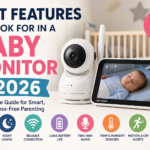
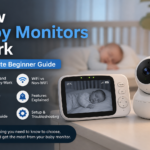
Before answering the question Are baby monitors safe, it helps to understand what these devices are meant to do. Modern monitors come in many forms, from simple audio units to more advanced movement tracking systems. The most common types include:
Audio monitors
These let parents hear their baby from another room. They are simple to use, have fewer technical risks, and are often seen as the least complicated option.
Video monitors
These provide sound and live images. They help parents see the baby’s position, movements, and general behaviour while resting.
WiFi-connected monitors
These connect to smartphones or tablets through the home internet. They offer convenience and extra features, but they also bring added privacy and security concerns.
Movement or biometric monitors
These claim to track breathing patterns or oxygen levels. Although these features may seem reassuring, they are not medical tools and should not be used to detect or prevent emergencies.
It is important to remember that baby monitors support awareness, but they cannot stop sudden medical events, and they do not replace safe sleep practices. When thinking about whether our baby monitors are safe, the answer depends more on realistic expectations and responsible use than on what the device promises.
Health and Environmental Factors
A key part of the question of whether baby monitors are safe is understanding the health and environmental issues linked to how these devices work. Many monitors use wireless signals that are similar to those from home routers or cordless phones. Research on long-term effects is still growing, so many parents choose a careful approach.
One practical point is how close the monitor is to the cot. If it is placed too near, it may expose the baby to unnecessary signals, and it also raises the risk of overheating or the baby touching cables. Keeping the monitor at least one metre away helps lower exposure and stops it from becoming a hazard in the sleep area.
Cord safety is also very important. Any loose wire near a cot can be dangerous, so the monitor should be mounted out of reach with cables firmly secured. The question of whether baby monitors are safe relates not only to wireless signals, it also includes everyday safety issues in the nursery that can be managed through good setup.
Parents who want to reduce wireless emissions can choose non-WiFi models or units with low power modes. These still provide audio or video awareness without constant internet use. There is no clear evidence that normal monitor signals cause harm; however, reducing exposure when possible is a simple and sensible step.
Privacy and Security Concerns With Connected Monitors
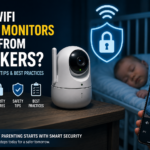
When parents ask, are baby monitors safe? Digital security is one of the most important things to think about. Many modern monitors connect through the home internet, which makes them convenient but also creates the chance of unauthorised access if the device is not set up properly. These risks can be prevented, but they still need attention.
WiFi models use apps and online platforms to stream audio or video. If a monitor has a weak password or old software, it is easier for someone to try to access it. Some devices also have default settings that allow remote entry from outside the home network, and many parents do not realise this. Because of this, safety depends not only on the brand but also on how well the monitor is secured after it is installed.
Parents can protect their home by choosing strong and unique passwords for the router and the monitor app, turning off features they do not need, and installing firmware updates as soon as they become available. These steps greatly lower the risk and make connected monitors safer to use.
For families who prefer more privacy, non-WiFi monitors are a good option. They use a closed local signal instead of the home internet. This removes most digital risks while still offering reassurance.
Understanding these points helps parents answer are baby monitors are safe from a privacy point of view. Connected devices can be used safely as long as good security measures are in place.
The Truth About Smart and Biometric Monitors
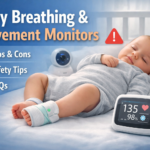
Many parents ask are baby monitors safe after seeing products that say they can track breathing movements, oxygen levels, or detailed sleep patterns. These smart or biometric monitors may sound helpful, but it is important to understand what they can really do.
These monitors often use sensors under the mattress or small wearables attached to the baby. They may show changes in movement, but they are not medical tools and should not be used to detect or prevent emergencies. Their readings can be uneven, and false alarms are common. A sudden alert in the night can cause unnecessary stress. On the other hand, no alert at all might make parents think everything is fine even when something needs attention.
The way these products are advertised can make them seem safer than traditional monitors. In reality, they should be seen as extra add-ons, not essential equipment. Safe sleep practices are still the most important way to protect a baby, and no home device can replace them.
Parents deciding whether smart monitors are useful should think about their own comfort level. Some families find the extra data confusing or stressful. Others like the extra information but use it carefully. In the end, the question of whether baby monitors are safe is more about expectations than the technology itself, because safety depends on how the device is used, not on what it promises.
Psychological Factors: The Impact of Over-Monitoring
When parents think about the question are baby monitors safe, they often focus on physical risks or digital safety. However, there is another important point to consider: the effect that constant monitoring can have on a parent’s mind. These devices are meant to bring comfort, but sometimes they can create more stress instead.
Having constant access to audio or video can lead parents to check the monitor again and again. This is especially common for first-time parents. Normal baby sounds, small movements, or short wake-ups can seem worrying when watched too closely. This can disturb a parent’s own sleep and make nights more stressful.
There is also the issue of relying on the monitor too much. If parents feel they must watch every moment, they may find it harder to trust their own instincts or follow natural routines. As children grow, being observed all the time can feel like constant supervision rather than support, which may affect their sense of independence.
These psychological factors are an important part of answering Are baby monitors safe. The device itself is not harmful, but the way it is used can affect stress levels and daily habits. Monitors work best when they offer calm awareness instead of constant checking. If parents notice that their worry is increasing, they may find it helpful to check the monitor less often or change the settings so it only alerts them when truly needed.
How to Use a Baby Monitor Safely
A simple and practical approach can help parents answer the question Are baby monitors safe in everyday life. Most risks can be reduced with a few easy steps that support a safe and comfortable sleep space.
- Safe placement matters: Place the monitor at least one metre away from the cot and mount it securely so it cannot fall or be pulled down. Do not put the device on the cot or near bedding. Good placement lowers exposure to signals and removes physical hazards.
- Keep cords well out of reach: Loose cables are a real danger in nurseries. All wires should be attached to the wall, tucked behind furniture, or arranged so they are far from the baby’s reach. Battery-powered units can help reduce cord risks in some setups.
- Protect digital security for connected models: For WiFi monitors, use strong passwords, secure the home router, and install software updates when they appear. These simple steps greatly improve safety and help ensure only trusted users can see the monitor feed.
- Choose the type that suits your comfort level: Some parents prefer non-WiFi monitors for extra privacy and simplicity. Others like smart features but use them carefully and focus on safe setup. The best choice depends on the household, not on advertising.
- Remember that monitors support, they do not replace supervision: Monitors offer awareness, but they must work together with safe sleep routines. Understanding this balance helps parents use them with confidence.
By following these steps, families can answer Are baby monitors safe with greater certainty, because most concerns can be managed through thoughtful habits and responsible use.
Who Might Benefit Most From a Baby Monitor
Baby monitors are not necessary for every family, but they can be very helpful in certain situations. Understanding who benefits most can make it easier to decide if a monitor suits your home and routine.
Parents using a separate nursery
When a baby sleeps in another room, a monitor helps parents stay aware without going in and out. This keeps the sleep space calm and allows parents to rest or move around the home with confidence.
Caregivers who need mobility
Many parents manage daily tasks, work from home or care for older children. A monitor provides reassurance while allowing them to stay productive without constant nursery checks.
Parents seeking occasional reassurance
Some families feel more relaxed when they can hear or quickly check on their baby during naps or night time sleep. A simple audio or video monitor can provide the right level of awareness without adding stress.
Homes with multiple floors or long distances between rooms
In larger homes, sound may not travel well. A monitor helps caregivers respond when needed, even from far away.
Parents with different sleep schedules
If one caregiver wakes earlier or later, a monitor helps coordinate care quietly without disturbing the whole household.
Baby monitors can be useful in many situations, but the most important thing is choosing one that supports your lifestyle rather than complicating it.
When a Monitor Might Not Be Necessary
Although many families find monitors helpful, there are situations where they may not add much value. Understanding these scenarios can prevent unnecessary purchases or reduce stress for parents who feel pressured to use more technology than they need.
- When room sharing already provides awareness: If a baby sleeps in the same room as their parents, the natural sounds of breathing, stirring, and waking are usually enough to stay aware without extra equipment. In this setup, a monitor may sit unused.
- When monitoring creates more anxiety than comfort: Some parents find themselves checking the device too often, especially during the early months. If watching the screen becomes a source of stress, stepping back from the device can be healthier for the whole household.
- Small living spaces where sound carries easily: In compact homes or apartments, it is often simple to hear a baby from any room. Adding a monitor in these cases offers minimal benefit.
- Parents who prefer a simpler approach: Not everyone enjoys using multiple devices or apps. Some families feel more relaxed relying on natural awareness and predictable routines rather than technology.
- Older infants who are mobile and vocal: As children grow, they become more capable of signalling when they need attention. At this stage, many families naturally phase out monitors.
Choosing not to use a monitor can be just as valid as choosing one. The goal is to find a setup that supports calm, rest, and consistency for both the baby and the parents.
Conclusion
Baby monitors can be useful tools for supporting awareness and confidence in the home, but they work best when paired with realistic expectations and a thoughtful setup. They offer convenience, help parents stay connected to their baby from another room, and can make daily routines easier, especially in larger homes or busy households.
At the same time, it is important to understand their limitations. These devices do not replace safe sleep practices, direct supervision, or the natural cues parents learn to recognise over time. Factors such as placement, cord safety, digital security, and personal comfort levels all play a role in how effective and appropriate a monitor will be for a particular family.
The goal is to choose a solution that fits your needs rather than assuming the most advanced option is automatically the right one. Some families feel reassured with a basic audio unit, while others prefer added features as long as they are used responsibly.
By weighing the benefits against your own routines and comfort levels, you can make a confident and informed choice about whether a monitor belongs in your home.