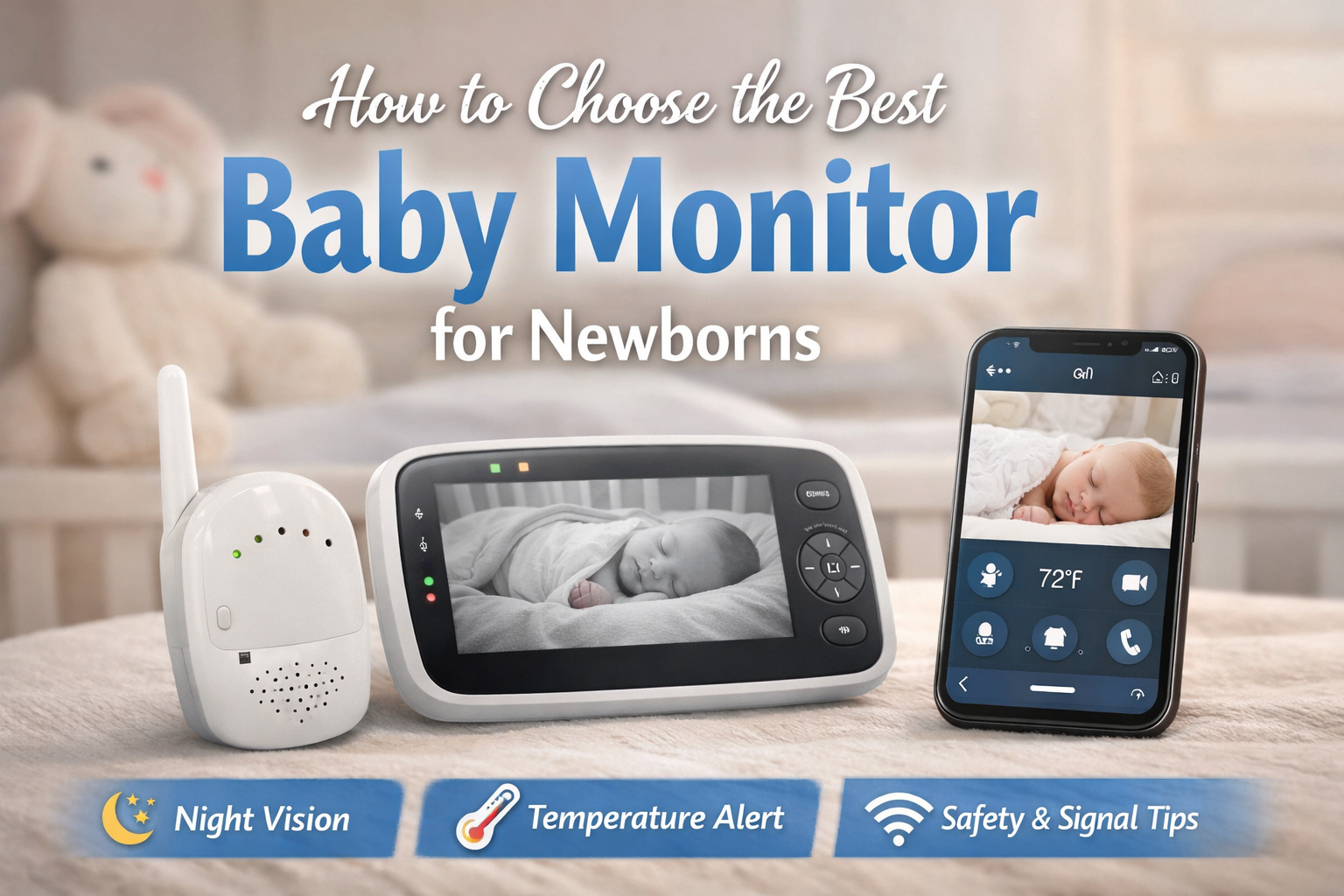
Bringing a newborn home is an exciting and emotional time, but it also comes with many new concerns, especially around sleep and safety. Newborns sleep for long periods throughout the day and night, often in a separate room, which naturally leads parents to look for reliable ways to stay aware of their baby’s needs. This is where choosing the right baby monitor becomes essential.
A baby monitor allows parents to listen to and sometimes see their newborn while they rest, offering reassurance without constant physical checking. For first time parents, it can reduce anxiety and help create a calmer routine, especially during night time monitoring. However, with so many options on the market, ranging from basic audio monitors to advanced smart systems, deciding which one is right can feel overwhelming.
Not all baby monitors are created equal, and not every feature is necessary for newborn care. Some parents prioritise simplicity and ease of use, while others value extra features such as night vision, temperature monitoring, or extended range. Understanding what truly matters for a newborn can help avoid overspending on features that may never be used.
This baby monitor buying guide is designed to help parents make an informed decision. We will explore the different types of baby monitors, explain the most important features to look for, discuss safety considerations, and show how your home environment and budget should influence your choice. By the end, you will have a clear understanding of how to choose a baby monitor for newborns that suits your lifestyle and gives you peace of mind.
Understanding Baby Monitor Types
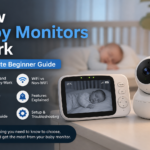
Before deciding on features or budget, it is important to understand the main types of baby monitors available. Each type serves a slightly different purpose, and the best choice depends on how you want to monitor your newborn and how much information you feel comfortable managing.
Audio Baby Monitors
Audio baby monitors are the most basic and traditional option. They transmit sound from your baby’s room to a receiver, allowing you to hear when your newborn wakes, cries, or becomes restless.
For many parents, especially those who prefer simplicity, audio monitors are more than enough. Newborns communicate primarily through sound, so hearing changes in breathing or crying is often all that is needed. These monitors are usually easy to set up, reliable, and less prone to technical issues.
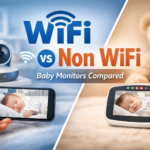
Audio baby monitors are also a popular choice for parents who are concerned about wifi connectivity or digital security, as many models operate on dedicated frequencies rather than internet connections. They are often more affordable and can be ideal for small homes or apartments where long range monitoring is not required.
However, the main limitation is the lack of visual confirmation. Parents who want to check sleep position or movements without entering the room may find audio only monitoring restrictive.
Video Baby Monitors
Video baby monitors add a visual layer to sound monitoring, allowing parents to see their newborn while they sleep. These monitors typically include a camera placed in the baby’s room and a handheld screen for parents.
For many families, video monitoring provides added reassurance. Being able to glance at the screen to confirm that a baby is sleeping peacefully can reduce unnecessary room visits, which may otherwise disrupt sleep. Features such as night vision make video monitors particularly useful for nighttime monitoring.
Video baby monitors are often recommended for first-time parents who want extra peace of mind. They can also be helpful once babies begin to move more during sleep, as parents can visually check positioning without physically intervening.
That said, video monitors tend to be more expensive than audio-only models and may require more setup. Screen size, camera quality, and battery life are important factors to consider when choosing this type.
Smart Baby Monitors
Smart baby monitors are the most advanced option and usually connect to a smartphone or tablet through an app. These monitors may offer additional features such as motion alerts, sound sensitivity adjustments, room temperature tracking, and cloud-based storage.
Some parents appreciate the flexibility of using their own device as a monitor, especially if they move around the house frequently. Smart monitors can also be useful for parents who want alerts sent directly to their phone.
However, smart baby monitors often rely on wifi, which introduces considerations around signal strength, data privacy, and reliability. For newborn care, many parents find that simpler systems meet their needs without the complexity of app management or frequent notifications.
When deciding between audio, video, or smart baby monitors, the key is to think about what will genuinely support your daily routine. The best baby monitor for newborns is not the one with the most features, but the one that helps you respond confidently and comfortably to your baby’s needs.
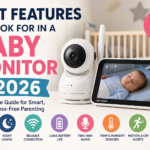
Key Features to Look for in a Baby Monitor for Newborns
Once you understand the different types of baby monitors, the next step is identifying which features truly matter for newborn care. While many products promote advanced functions, not all of them are essential during the early months. Focusing on practical, everyday features can help you choose a baby monitor that supports both safety and peace of mind.
Clear Audio Quality and Sound Sensitivity
For newborns, sound monitoring is one of the most important functions of a baby monitor. Clear audio allows parents to hear even subtle noises, such as light stirring or early signs of waking. A monitor with adjustable sound sensitivity ensures you are alerted when your baby needs attention without being disturbed by constant background noise.
Some monitors offer noise filtering to reduce static or interference, which can be especially useful in homes with other electronic devices. Reliable audio quality is essential, regardless of whether you choose an audio only or video baby monitor.
Night Vision for Low Light Monitoring
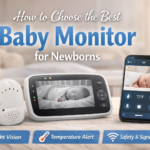
Newborns sleep frequently and often during the night, making night vision an important feature for parents who choose a video baby monitor. Night vision allows you to see your baby clearly in low light or complete darkness without turning on a lamp or entering the room.
This feature is particularly helpful for night time monitoring, as it lets you quickly check if your baby is asleep, stirring, or in need of comfort. Good night vision should provide a clear image without glare or excessive brightness.
Room Temperature Monitoring
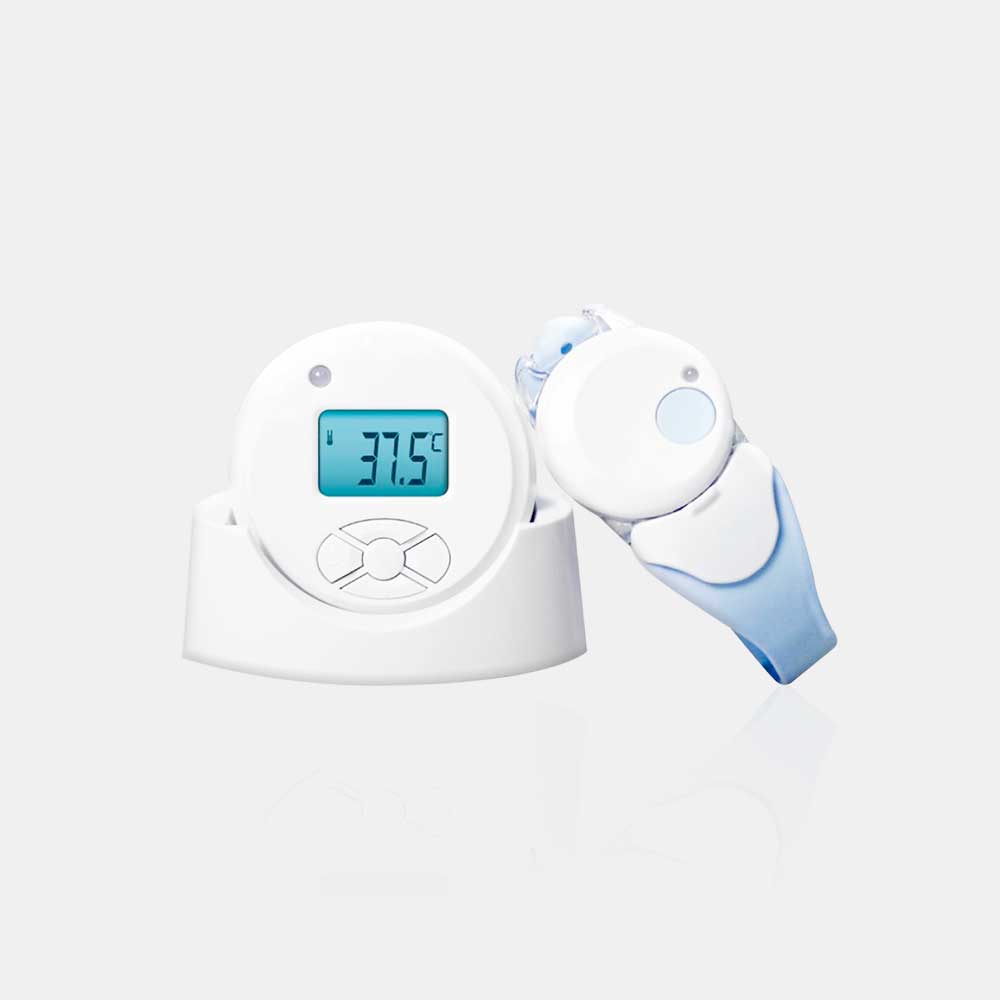
Maintaining a comfortable sleep environment is important for newborn safety. A baby monitor with a temperature sensor can help parents stay informed about changes in the room, especially during seasonal transitions.
While temperature readings should not replace proper room setup and clothing choices, they can act as an extra layer of awareness. Some monitors allow you to set alerts if the room becomes too warm or too cool, which can be helpful for peace of mind.
Two Way Audio for Reassurance
Two way audio allows parents to speak through the monitor to their baby. While newborns may not respond to voices in the same way as older infants, hearing a familiar voice can sometimes provide reassurance.
This feature can also be useful for gently soothing a baby without immediately entering the room. However, it should be seen as a supportive feature rather than a necessity, especially during the early newborn stage.
Range and Signal Reliability
A baby monitor must maintain a strong and stable connection throughout your home. Range is especially important for larger houses or multi level homes, where signal dropouts can be frustrating and concerning.
Non wifi monitors often advertise a specific range, but real world performance depends on walls, floors, and interference from other devices. Choosing a long range baby monitor with reliable signal strength ensures consistent monitoring whether you are in another room, the garden, or a different floor.
By focusing on these core features, parents can avoid unnecessary complexity and choose a monitor that supports daily newborn care. The goal is not to monitor every movement, but to stay informed, responsive, and confident in your baby’s safety.
Safety Considerations for Newborns
When choosing a baby monitor for newborns, safety should always be a top priority. While baby monitors are designed to support infant care, understanding how to use them safely and what potential concerns to be aware of can help parents make more confident decisions.
Understanding EMF and Radiation Concerns
Many parents worry about exposure to electromagnetic fields, often referred to as EMF, from electronic devices in a newborn’s environment. Baby monitors, like other wireless devices, emit low levels of radiation, but most products on the market are designed to meet strict safety standards.
If EMF exposure is a concern, parents may prefer non wifi baby monitors that operate on secure radio frequencies. These models often emit lower and more consistent signals compared to internet connected devices. Another simple step is placing the monitor at a safe distance from the baby’s crib rather than directly above or next to it.
It is important to remember that baby monitors are a support tool, not a replacement for safe sleep practices. Following general guidance for newborn sleep environment remains far more important than the type of monitor used.
Wifi Security and Data Privacy
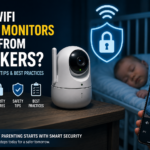
For parents considering smart baby monitors, data security is an important factor. Wifi enabled monitors transmit audio and visual data through an internet connection, which means they can be vulnerable if not properly secured.
Choosing a monitor from a reputable brand, using strong passwords, and keeping firmware updated can reduce security risks. Some parents prefer monitors that do not rely on cloud storage or external servers, especially when the primary goal is simple newborn monitoring.
If privacy and reliability are top concerns, a closed system monitor with a dedicated parent unit may feel more reassuring during the newborn stage.
Safe Placement of the Baby Monitor
Correct placement of the baby monitor is essential for both safety and functionality. Cameras and cords should always be kept well out of reach of the crib to prevent any risk of entanglement. Wall mounting at a safe distance or placing the monitor on a secure shelf is often recommended.
The monitor should provide a clear view or sound of the baby without being intrusive. Avoid placing it too close, as this can cause audio feedback or distorted visuals. Proper placement ensures effective monitoring while maintaining a safe sleep environment.
Using Baby Monitors Responsibly
Baby monitors are designed to support parental awareness, not to replace supervision or safe sleep routines. Constantly watching a monitor can increase anxiety rather than reduce it, especially for first time parents.
Using alerts wisely, checking the monitor when needed, and trusting established routines can help create a healthier balance. A baby monitor should offer reassurance, not additional stress.
By considering EMF exposure, data privacy, placement, and responsible use, parents can choose and use a baby monitor in a way that supports newborn safety and peace of mind.
Choosing the Right Baby Monitor Based on Your Home
Your living space plays a major role in deciding which baby monitor will work best for your newborn. Factors such as home size, layout, wall thickness, and daily routines can all affect monitor performance. Choosing a baby monitor that suits your environment helps ensure reliable monitoring without frustration or signal issues.
Baby Monitors for Small Apartments
In smaller apartments or studio style homes, range is usually less of a concern. Walls are fewer, distances are shorter, and interference is often minimal. For these spaces, a simple audio baby monitor or a basic video baby monitor may be more than sufficient.
Parents living in apartments often prioritise ease of use and compact design. A monitor that turns on quickly and delivers clear audio without frequent adjustments is ideal. Since rooms are close together, high powered transmitters or extended range features are rarely necessary.
Another consideration in apartment living is interference from neighbouring devices. Choosing a monitor with a secure, dedicated connection can help reduce background noise or signal overlap from other electronics.
Baby Monitors for Larger Homes
Larger homes, multi level houses, or properties with thick walls require baby monitors with stronger signal reliability and longer range. In these environments, a long range baby monitor becomes especially important to ensure uninterrupted monitoring when moving between floors or rooms.
Parents may want to look for monitors that advertise extended indoor range and strong signal penetration. Non wifi monitors with dedicated parent units often perform well in larger homes, as they do not rely on internet strength or router placement.
Battery life also becomes more important in larger spaces, since parents may carry the monitor with them throughout the day. A reliable battery ensures consistent monitoring without frequent recharging.
Shared Homes and Multi Caregiver Setups
In homes where multiple caregivers are present, such as shared households or homes with extended family, ease of access and simplicity are key. A baby monitor that is intuitive and quick to use helps ensure everyone can respond appropriately to the newborn’s needs.
Some parents prefer monitors with multiple receivers or adjustable volume settings to suit different users. Clear audio alerts help caregivers stay aware without needing constant visual monitoring.
Portability and Travel Considerations
For families who travel or move frequently between rooms, portability can be an important factor. Lightweight monitors that are easy to pack and set up allow parents to maintain familiar routines even when away from home.
Portable baby monitors are also useful for daytime naps in different rooms. A flexible setup ensures consistent monitoring without the need to reposition complex equipment each time.
By matching your baby monitor choice to your home environment, you can avoid common frustrations such as dropped signals, unnecessary features, or limited coverage. The right fit supports smooth daily routines and reliable newborn monitoring.
Budget Considerations and Value for Money
When choosing a baby monitor for newborns, budget plays a significant role. With options ranging from very affordable to premium priced models, it can be difficult to know what represents good value for money. Understanding which features are essential and which are optional helps parents make a confident and cost effective decision.
Understanding What You Are Paying For
The price of a baby monitor is often influenced by the type of monitor and the number of features included. Basic audio baby monitors are usually the most affordable, offering reliable sound monitoring without additional complexity. Video baby monitors generally cost more due to camera technology, screens, and features such as night vision.
Smart baby monitors tend to sit at the higher end of the price range. These models often include app connectivity, alerts, and advanced tracking options. While these features can be appealing, they are not always necessary for newborn care.
Before setting a budget, it is helpful to decide which features genuinely support your daily routine. Paying extra for functions you are unlikely to use does not always improve the monitoring experience.
Affordable Baby Monitors That Meet Newborn Needs
Many affordable baby monitors provide excellent performance for newborn monitoring. Clear audio, stable signal strength, and simple controls are often all that is needed in the early months.
Budget friendly options can be especially suitable for small homes, short monitoring distances, or parents who prefer minimal setup. Choosing a reliable brand with positive reviews can help ensure quality without unnecessary expense.
An affordable baby monitor does not mean compromising on safety. Many lower priced models still meet strict safety standards and deliver consistent performance.
When Higher Priced Monitors Make Sense
There are situations where investing in a higher priced baby monitor may be worthwhile. Larger homes, multi level layouts, or parents who value visual monitoring may benefit from features such as extended range, larger screens, or higher quality night vision.
Some parents also appreciate monitors with longer battery life or stronger build quality, which can justify a higher upfront cost. In these cases, the added convenience and reliability can enhance daily use.
Balancing Cost and Practical Use
The best baby monitor for newborns is one that balances cost with real world usefulness. Rather than focusing on price alone, consider how the monitor will be used day to day. A simpler monitor that fits your routine often delivers more value than an expensive model packed with unused features.
By setting clear priorities and understanding what you truly need, you can choose a baby monitor that offers both peace of mind and good value for money.
Common Mistakes Parents Make When Buying Baby Monitors
With so many baby monitor options available, it is easy for parents to make decisions that do not fully support their needs. Understanding common mistakes can help you avoid unnecessary stress and choose a baby monitor that truly works for your newborn and your household.
Buying Too Many Features That Go Unused
One of the most common mistakes is choosing a baby monitor based on the number of features rather than practical use. While advanced options can sound appealing, many parents find that they only rely on a few core functions, such as clear audio and reliable alerts.
Extra features may add complexity, require frequent adjustments, or create distractions. For newborn care, simplicity often leads to a smoother and more reassuring experience.
Ignoring Range and Signal Strength
Another frequent oversight is underestimating the importance of range. A baby monitor that works well in a store demonstration may struggle in real home conditions due to walls, floors, or interference from other devices.
Parents living in larger homes or multi level properties should prioritise signal reliability. Choosing a monitor without sufficient range can lead to dropped connections or delayed alerts, which can be both frustrating and concerning.
Choosing Complicated Setup and Controls
Some baby monitors require lengthy setup processes or complex menus. While these systems may offer advanced customisation, they can be challenging to manage, especially during the early newborn period when parents are adjusting to new routines.
A monitor that is intuitive and quick to use allows parents to focus on their baby rather than on managing settings. Ease of use is especially important during night time monitoring.
Relying Too Heavily on the Monitor
Baby monitors are a helpful tool, but relying on them too heavily can increase anxiety. Constantly checking visuals or alerts may lead parents to second guess normal newborn behaviour.
Using the monitor as a support rather than a constant source of information helps create a healthier balance. Trusting established routines and responding when needed is often more effective than continuous monitoring.
Not Considering Long Term Use
Some parents choose a baby monitor with only the newborn stage in mind. While this is understandable, considering how the monitor may be used in the coming months can add value.
Features such as adjustable sensitivity, expandable cameras, or portable design can support ongoing use as your baby grows. However, these considerations should not overshadow immediate newborn needs.
By avoiding these common mistakes, parents can choose a baby monitor that fits their lifestyle, supports their confidence, and enhances newborn care without unnecessary complexity.
Final Checklist Before Buying
Before making a final decision, it helps to run through a simple checklist to ensure the baby monitor you choose meets your newborn’s needs and fits your daily routine. This final step can prevent regret purchases and help parents feel confident in their choice.
Does the Monitor Match Your Monitoring Style
Consider whether you prefer sound only monitoring or if visual reassurance is important to you. Some parents feel comfortable responding to audio cues alone, while others appreciate being able to check their newborn visually. Choosing a monitor that aligns with your comfort level can reduce stress and make monitoring feel more natural.
Is the Audio Clear and Reliable
Clear audio is essential for newborn monitoring. Check whether the monitor offers adjustable sound sensitivity and consistent sound transmission. Reliable audio ensures you can respond promptly when your baby needs attention, even during sleep or while moving around the house.
Does It Work Well in Your Home Environment
Think about your home’s size, layout, and construction. Make sure the monitor’s range and signal strength are suitable for your space. For larger homes, strong indoor range and stable connectivity are especially important.
Are Safety and Privacy Considered
Ensure the monitor meets safety standards and can be placed securely away from the crib. If you choose a wifi based monitor, confirm that it includes basic security protections such as password control and updates.
Is It Easy to Use During Day and Night
Ease of use is often underestimated. Simple controls, clear displays, and reliable battery life can make a significant difference, especially during night time monitoring when quick responses matter.
Does the Price Reflect Real Value
Finally, consider whether the cost matches the features you will actually use. The best baby monitor for newborns is one that delivers peace of mind without unnecessary complexity or expense.